Storage price increase 2026 is hitting consumers hard. Here’s why USB drives, SD cards and SSDs are getting so expensive…
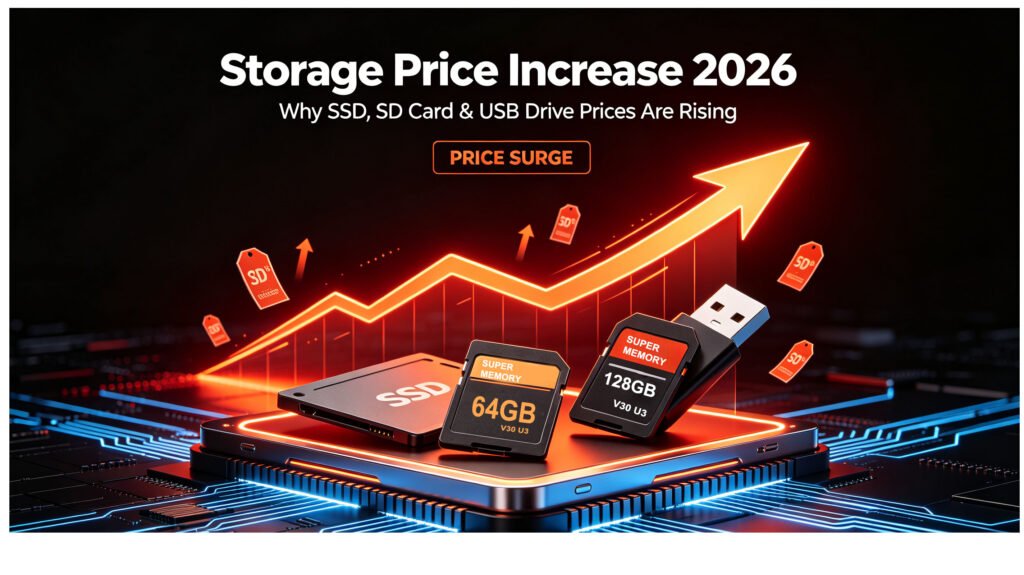
If you’ve been following the storage price increase 2026 of USB flash drives, memory cards, or SSDs recently, you’ve probably noticed that these items have become more expensive, and the increases are quite significant.
Many people are asking, what’s going on? And how long will the storage price increase 2026 last?
Today, let’s talk about this.
Who’s “stealing” our storage chips?
The core issue is actually one thing—AI is too hot.
You might think, what does AI have to do with USB flash drives? But in fact, AI servers require a large number of high-performance storage chips, especially HBM (High Bandwidth Memory) and enterprise-grade SSDs. An AI server uses dozens of times more storage chips than a regular server.
Chip giants have discovered that selling high-end chips to AI companies is far more profitable than selling chips for ordinary USB flash drives. Therefore, they prioritize allocating production lines, engineers, and raw materials to produce the more profitable AI chips.
This impact has already spread to the electronic products we use every day. In the first half of 2026, the prices of mobile phones, computers, and other terminal devices also saw price increases. Prices for some models from major mobile phone brands have increased by several hundred yuan, and laptop prices have even risen by 20%. Storage chips are no longer an “invisible” component; they directly impact our budgets for electronic products.
The result is: the production capacity for chips used in ordinary USB flash drives, memory cards, and SSDs has been squeezed.
With less supply, prices naturally go up.
How Much Has the Price Increased? It’s Gone Crazy!
This price hike is no small matter:
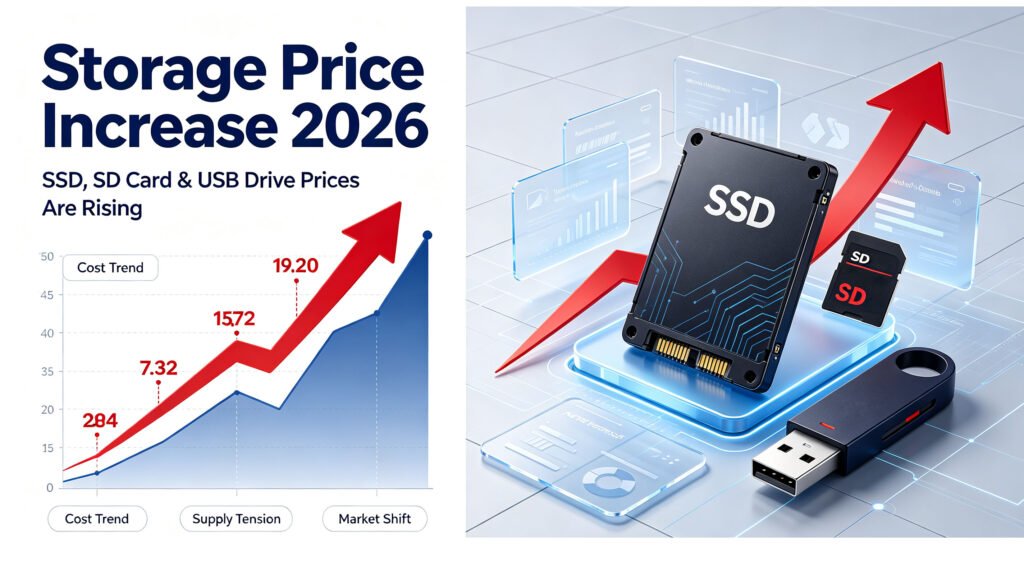
- A 32GB USB flash drive has jumped from around $6 to nearly $13, more than doubling in price.
- A 1TB SSD has risen from around US$75 to over US$150.
- Some popular models have prices that change every day, sometimes by tens of USD per day.
One distributor joked, “If you don’t buy today, you’ll lose money tomorrow.” While exaggerated, this reflects the reality.
How Long Will the storage price increase 2026 Last?
Frankly, it’s unlikely to come down in the short term.
- AI demand is still growing—large companies are still continuously buying chips and building data centers.
- Major manufacturers are unwilling to turn back—producing high-end chips is highly profitable, and manufacturers are unlikely to voluntarily reduce production.
- New factories take time to build—even if production expansion begins now, it will take two to three years to become operational.
UBS, Nomura Securities, and other institutions predict that this round of price increases may continue until 2027 or even longer.
The good news is that the speed of price increases may gradually slow down. After all, high prices will reduce consumer purchases, suppressing market demand.
What should a consumer do now?
If you don’t urgently need it, consider waiting and seeing. While prices won’t drop drastically in the short term, they also won’t rise indefinitely.
If you really need to buy, act quickly. Based on current trends, tomorrow’s prices may be higher than today’s.
In conclusion
This price increase is different from previous ones; it’s not a minor market fluctuation, but rather a structural change brought about by AI. Simply put, the “cheap era” for USB drives and memory cards may be temporarily over.
For those of us in the storage product industry, this is also a time to rethink our inventory and pricing strategies. Staying focused on the market and making reasonable procurement arrangements are crucial for navigating this wave of price increases more smoothly.
This article Storage Price Increase 2026 is based on market data and analysis from June to July 2026 and is for reference only. Storage prices are affected by various factors; please make specific purchasing decisions based on your actual situation.